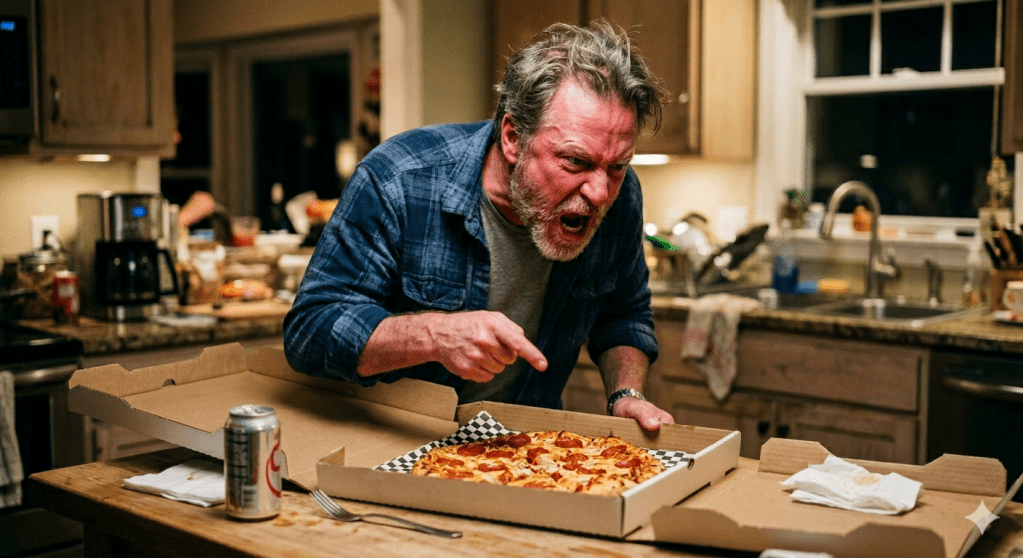
My wife, who does not share my love for anchovy pizza, was out of town. I was in the grocery store, holding a shopping list.
On a whim, I threw a frozen pizza (not on the list) into my cart. My plan was to grab a can of anchovies (also not on the list) before I left the store.
Spoiler alert: it didn’t happen.
As I took a carton of soy milk and tub of greek yogurt (both on the list) from the dairy section, I reminded myself to get the anchovies.
I checked off the box of Grape Nuts, and said, “Don’t forget the anchovies” to myself.
Sliced cheese and lunchmeat? Check, check.
Then I paid for my groceries and drove home, where I angrily consumed an anchovy-less pizza.
Absent-mindedness is nothing new for me. Over the years I’ve left the iron plugged in and a stove burner on more than once. During my road warrior days, I left my possessions all over the United States, one piece at a time.
So when I forget stuff I usually shrug and move on.
That’s changed since my Parkinson’s diagnosis. I now interpret every minor lapse as a sign of the impending memory apocalypse. And I guess sometimes an anchovy isn’t just an anchovy.
This particular can of fish caused me to take action.
I thought back to a business book called Getting Things Done by David Allen. The book was a big deal in the sales world when I read it in the early 2000’s.
It is unfortunate that I no longer have my copy of the book, so the description below is based on the memory of a guy who is concerned about his memory.
I think this system is gonna work anyway, but you can draw your own conclusions.
The Big Idea I got from Getting Things Done was that we can’t trust ourselves to remember everything we need to remember. So we need to write the important stuff down as soon as we think about it.
The benefit, said Allen, was that once we wrote an item down, we didn’t have to devote any more mental energy to that item — it was “remembered.”
In 2001 when the book first came out, there were very few digital tools to help us with this. Whenever I thought of something I needed to do — a phone call, an edit to a proposal, something to research — I’d immediately write it on a sticky note, and throw the sticky note into a box on my desk.
I didn’t have to decide anything about what or when to take an action — all I had to do was throw the notes into the box and move on. The rest would happen later when I cleared out all the notes.
Once or twice a day I’d go through the notes in the box and “process” them. Some things would be written on specific days on my calendar. Others went on other lists depending on their importance and/or urgency. There was a system of folders to keep everything straight and organized.
Ultimately, I found the Getting Things Done system too complicated and unwieldy for me. I abandoned it after a year or so.
But the WRITE DOWN EVERYTHING IMMEDIATELY principle was beneficial, and in 2026 I’ve decided to bring back a simplified version of Allen’s advice to plug any developing memory holes.
Instead of sticky notes, I’m using a phone app called Anylist. The app is designed to do one thing — make lists. In addition to the grocery and Costco lists my wife and I share, I have a list called Random Stuff. That’s where I record anything I think of for later processing.
It’s digital sticky notes in a digital box.
Anylist lives on my phone, my tablet, my desktop computer, and — most crucially — Alexa. We have five Alexa devices in our house.
My system is a pretty simple one: whenever I think of something I need to accomplish, it goes onto my Random Stuff list.
Once or twice a day, I look at Random Stuff and move the items into an appropriate spot on my Google Calendar.
I also make use of Allen’s “Two Minute Rule:” If I can get something done in two minutes or less (like, for example, grabbing a can of anchovies while I’m in the store), I do it immediately so I don’t have to think of it again.
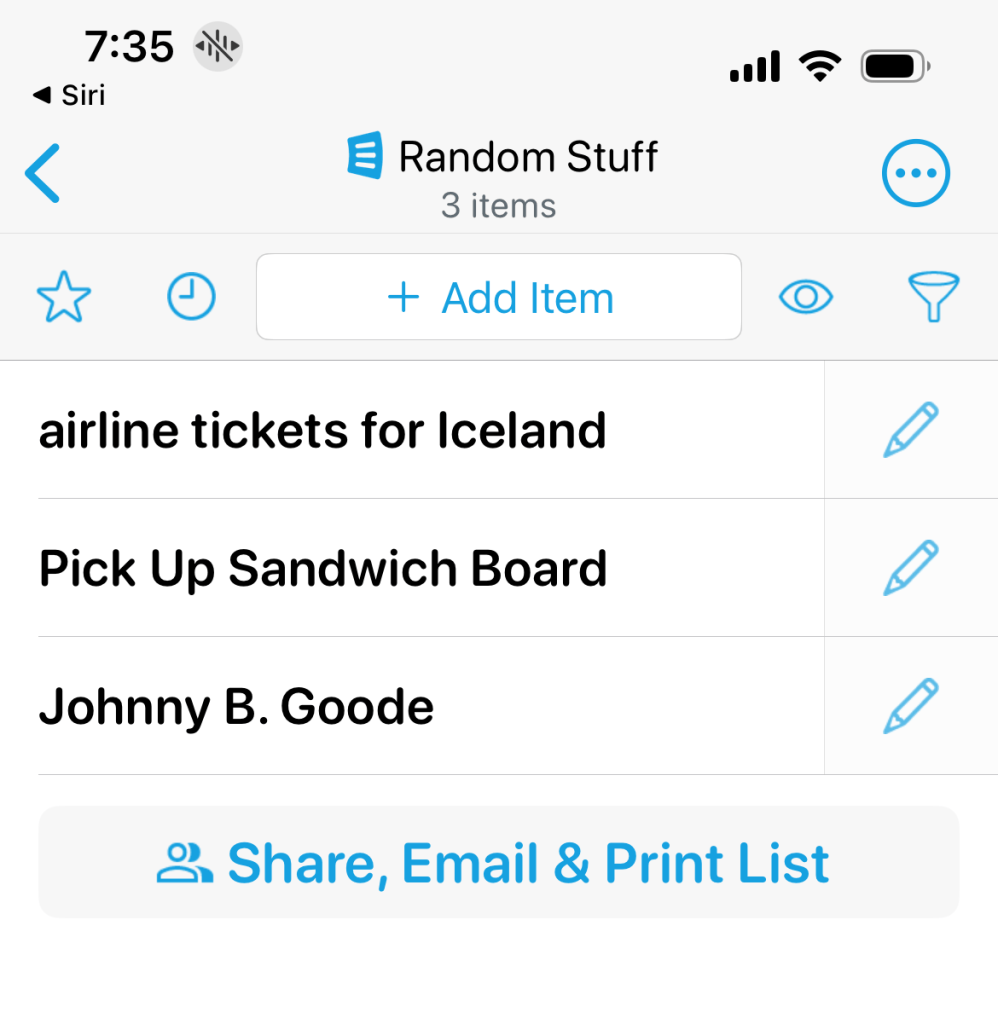
The other day, while standing in my kitchen, I realized we hadn’t purchased airline tickets for an Iceland trip we’ve got planned for the fall. So I spoke these words aloud:
“Alexa…tell Anylist to add ‘airline tickets to Iceland’ to my Random Stuff list.”
Seconds later, my Random Stuff list looked like this.
.
The airline tickets and sandwich board items went onto my calendar for days when I could accomplish those tasks. The link for an unusual Chuck Berry cover is now in my “Future Blog Bonus Videos” folder online.
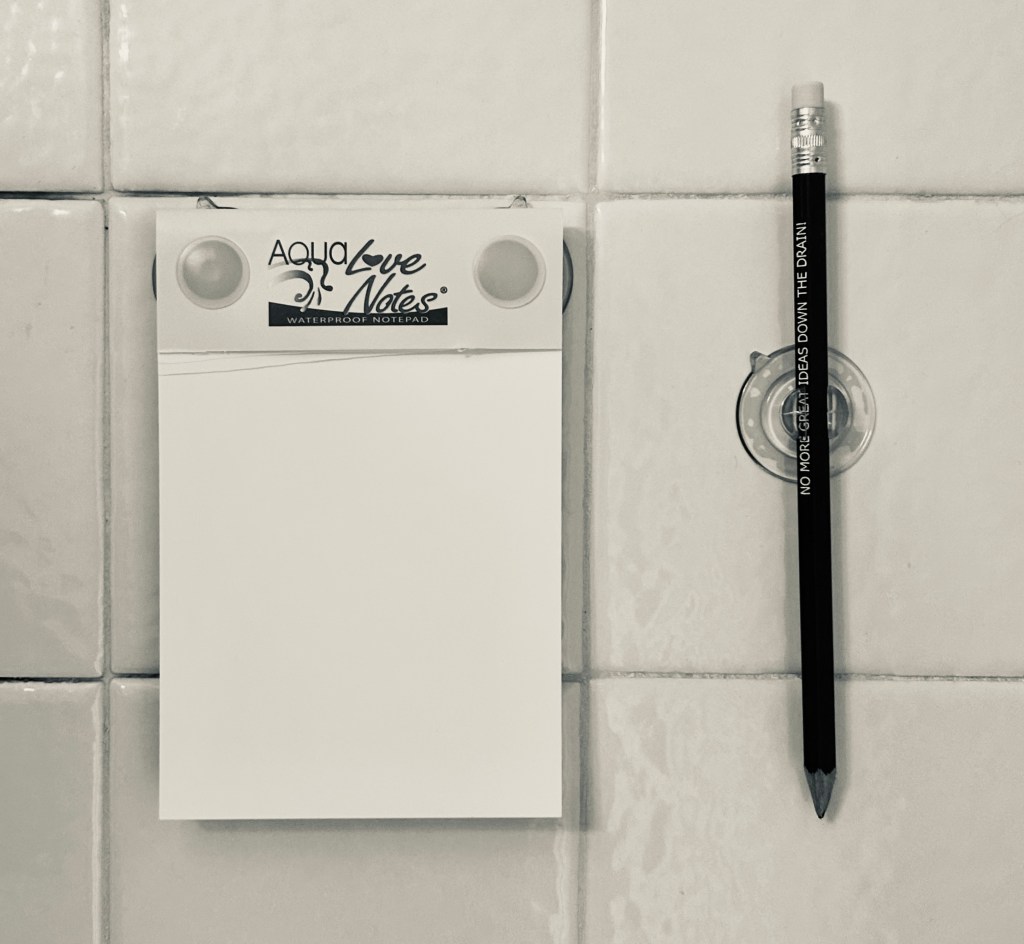
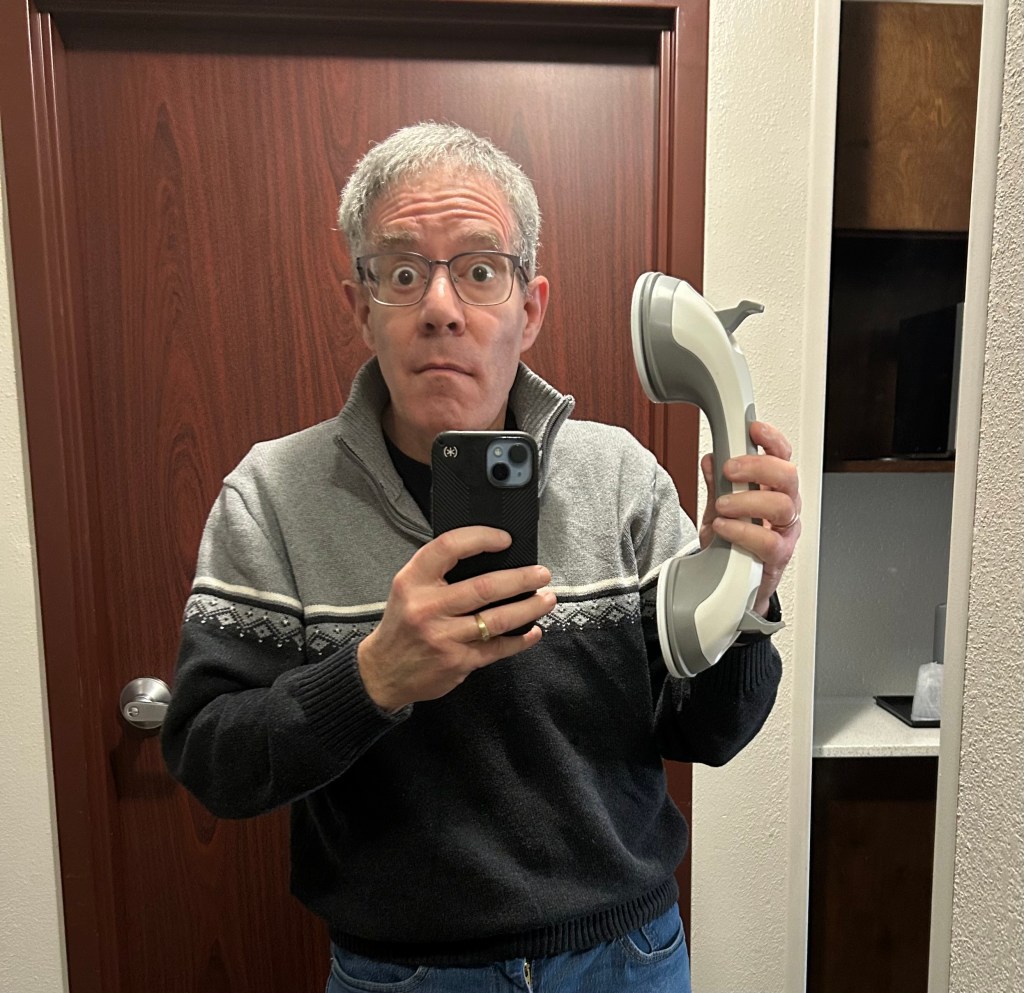
There’s also now a waterproof notepad attached to my shower wall to capture useful thoughts that occur as I lather, rinse, and repeat.
Whether Parkinson’s is doing a number on my memory or it’s just Phil being Phil, I need to get better at remembering stuff.
I’ve taken tangible steps to do that, but none of this will help unless
- I write down EVERYTHING I need to remember at the moment the thought arrives. Between my phone, my tablet, my desktop, and my Alexa devices, I am rarely out of range of a tool to do this.
. - I review my Random Stuff list and my calendar regularly to get the tasks done.
Early returns are promising. But the proof will be in the pizza.
.
.
What’s In Your Pills?
A couple of Loyal Readers (thank you, Rob and Dave!) alerted me to a story from Scotland, where researchers have used E-coli bacteria to convert plastic into Levodopa.
Since I take six Carbidopa/Lebodopa tablets every day, this raised an interesting question:
What the hell have I been I putting in my mouth? Are these miracle pills made out of WD-40?
It turns out that some of the materials are, in fact, derived from petroleum products:
L-DOPA works by increasing dopamine levels in the brain, and its production usually relies on petroleum-derived precursors. By sourcing these precursors from plastic waste instead of fossil fuels, the study demonstrates a dual-benefit system: reducing non-biodegradable waste while lowering the carbon footprint of pharmaceutical manufacturing.
So let’s brace ourselves for a future in which our medications are made with E-coli sprinkled on old bottles of Diet Mountain Dew.
.

Bonus for Those Who Read to the Bottom
This robot plays a pretty good game of tennis. If they ever make one that plays ping pong, I will buy it, and I don’t care what it costs.
.
Ronnie Dukes and Rickie Lee reinterpret “Pinball Wizard.” You may or may not want to watch all seven minutes, but you should definitely stick around for the tap-dance-and-drums portion, which begins at the 3-minute mark.
.
Bobby McFerrin with an energetic cover of the Young Rascals “Good Lovin.”
.
Susan Tedeschi, Derek Trucks and band salute Sly Stone on the Howard Stern Show. Eight minutes of pure joy.
.
As Bruce Springsteen prepares to play Portland this week, Loyal Reader Terry reminded me of the best Springsteen cover ever, by The Band.



 Shakin' Street -- A Parkinson's Blog
Leave a comment