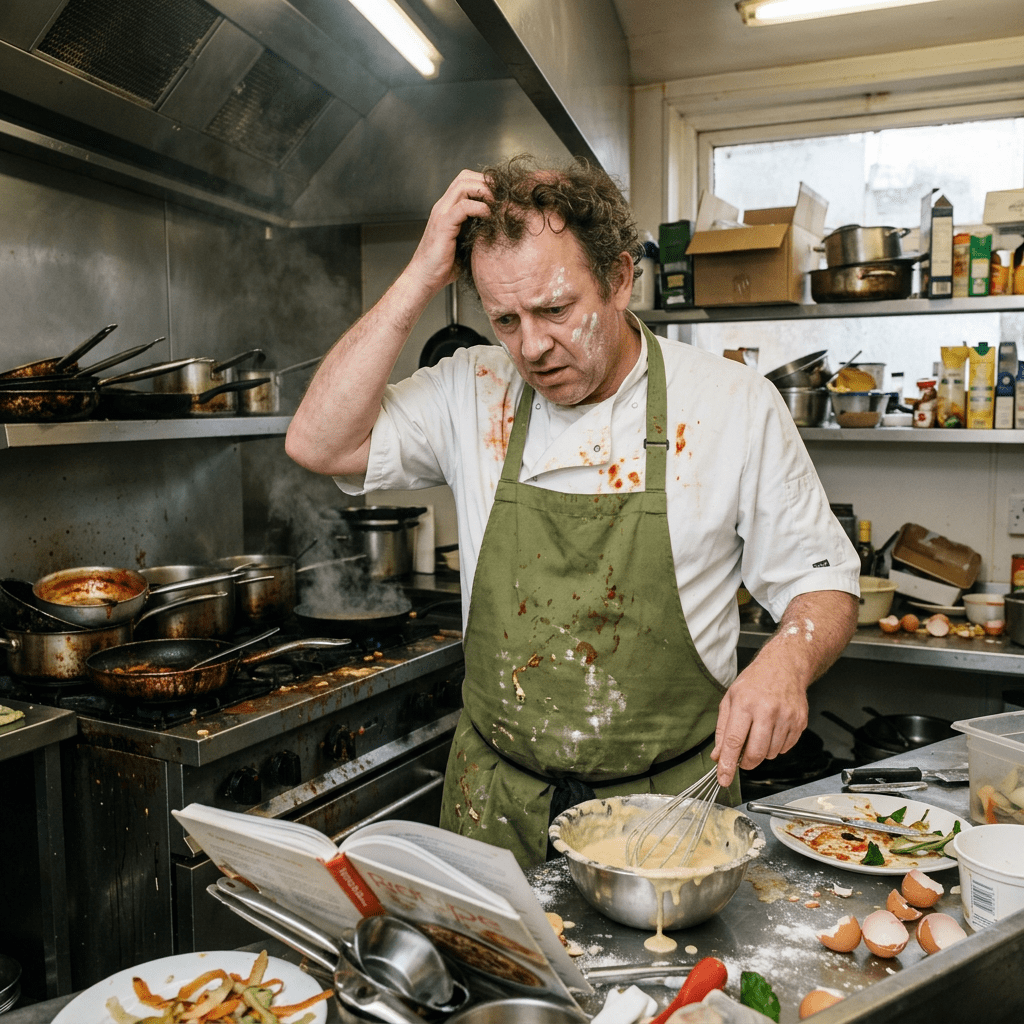
I invented Clamburger Helper.
Some time in the early 80’s, I found a box of Cheeseburger Macaroni Hamburger Helper in my apartment pantry. The refrigerator contained the required cup of milk and cube of butter. The box had the noodles and cheese sauce powder packet.
But I had no ground beef. But I found a can of clams in a cabinet.
30 minutes later, Walla! Clamburger Helper.
I’ve prepared this delicacy several times since. It’s pretty good.
So it’s not like I can’t cook anything.
I thought about Clamburger Helper recently when Medical News Today reported on the Japanese Gerontological Evaluation Study (JAGES).
The research, which followed almost 11,000 adults over 65, concluded cooking at home was associated with a significant reduction of dementia risk. The benefits were especially high for people who didn’t really know how to cook — folks like me.
“We focused on home cooking because the 2020 Lancet Commission reportTrusted Source identified that around 40% of dementia cases could be prevented by changing lifestyle factors like diet and physical activity,” Yukako Tani, PhD, (she/her) associate professor in the Department of Public Health at the Institute of Science Tokyo in Japan, and the first and corresponding author of this study, told Medical News Today. “
Cooking at home promotes healthier eating habits, such as increased vegetable and fruit intake and less processed food consumption. It also involves physical activities like shopping and meal preparation, which are important sources of exercise for older adults, especially after retirement,” Tani continued.
“Additionally, cooking requires complex cognitive tasks such as planning, selecting ingredients, and following recipes, providing mental stimulation. Because home cooking combines nutritional, physical, and cognitive benefits, we saw it as a promising but underexplored factor in reducing dementia risk.”
Overall, the participants who cooked at home had a 23-27% lower dementia risk than the general population. And people with “few cooking skills” saw a 67% reduction in their risk.
Yukako Tani believes that “cooking is a more cognitively novel and stimulating activity for novice cooks with low cooking skills than for advanced cooks with high cooking skills.”
Although I recently applied some canned anchovies to a Papa Murphy’s pizza before baking, the truth is:
1. I do very little actual cooking.
.
2. My family has a history of dementia.
JAGES is an observational study, so it shows correlation, not causation. But as a devout straw-grasper, I’m willing to start cooking, at least once a week. There’s some travel coming up, so this experiment will likely begin in mid-May.
For my debut performance, PDXKnitterati found a recipe for Sheet Pan Chicken with Black Beans and Squash. I will assemble a list of ingredients, purchase them at the store, locate the pots and pans, and cook this thing.
The Multnomah County Health Department is standing by.
Bonus for Those Who Read to the Bottom
Want to support this blog?

.
Filipino folk musicians do Abba.
.
Paul Lynde, Florence Henderson and Pinky Tuscadero perform a gender-neutral version of Johnnie Taylor’s “Disco Lady.” I’d be very interested to learn who thought this was a good idea.
.
What we’re looking at, alas, is not a real performance of Rage Against the Machine’s “Killing in the Name” — it is a very impressive feat of video editing. But, boy howdy, this guy can edit.
.
I don’t know how to explain this.







 Shakin' Street -- A Parkinson's Blog
Leave a comment