If life is a box of chocolates, Parkinson’s Disease is the chocolate factory on “I Love Lucy.”
Unseen gremlins relentlessly pump out a huge variety of symptoms and challenge Lucy and Ethel — us — to manage the onslaught.
The conveyor belt never stops. We can only hope to slow it down for a while.
What manner of fudge will be in the next piece we’re forced to unwrap?
I try to anticipate.
To combat increasing absentmindedness, I make a concerted effort to put things away IMMEDIATELY when I get home — sunglasses in the cubby next to the front door, car keys in the key box, wallet on the corner of the dresser.
There’s now a rail attached to the wall next to my treadmill, giving me something extra to grab onto if my balance betrays me.
I keep a hiking pole next to my bed for the days when it’s tough to stand up first thing in the morning.
But I hadn’t thought much about my eyesight, until a recent social media post got me thinking.
Esther Labib-Kiyarash is a Young Onset PD patient advocate who goes by “ShakingInMyboots Esther” on Facebook. She recently encountered an unexpected and scary new optical symptom while traveling.
Woke up to go to the bathroom in the hotel room, turned on the bathroom light, when leaving turned light off and proceeded to walk towards the bed. But when the light went out I was in COMPLETE darkness! I saw no light anywhere! Nothing to provide a clue as to where I was in the room.
Just an overwhelming feeling of darkness and disorientation in space. Logically I knew the room had points of light. Multiple devices charging, a digital alarm clock, I saw none of these. Afraid to proceed and possibly run into something or fall, I sank slowly down to the floor. To crawl. Then suddenly my eyes adjusted and I saw lights.
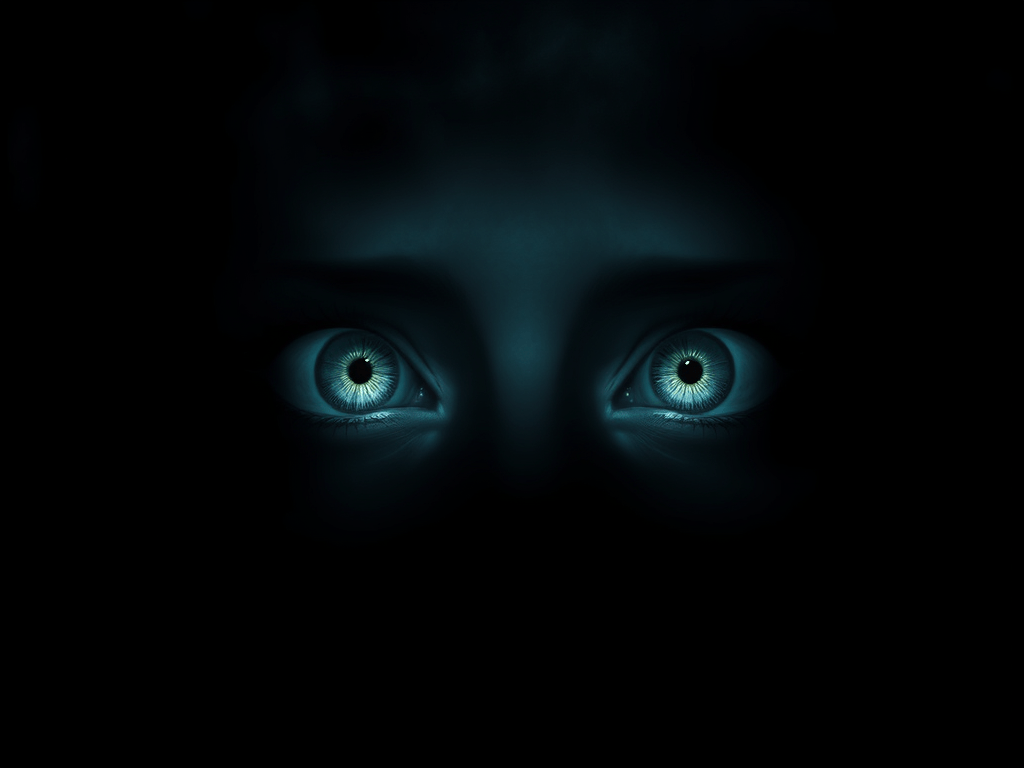
When Esther turned on the bathroom light, her eyes adjusted. When she turned the light back off, they didn’t immediately adjust back — leaving her in a pitch-black unfamiliar hotel room.
Turns out it’s a Parkinson’s thing called Impaired Pupil Light Reflex. In some PD patients, the automatic contraction or dilation of the pupil doesn’t happen properly when light changes.
I was vaguely aware of the existence of eyesight symptoms. But I didn’t realize how common they were.
In a 2020 Netherlands study, 82% of participants with PD exhibited vision issues, compared with 48% of the control group.
This information convinced me to schedule a long-overdue eye exam.
It also caused me to order two night lights for travel. They live in my suitcase.
If I don’t turn on the hotel room bathroom light at 3am, my eyes will have nothing to adjust to.
And the battle continues.
.
If You Found This On LinkedIn…
…could you help me with an experiment?
There has been a huge drop in LinkedIn organic reach — just about everyone working the “Online Influencer” racket is complaining about a drastic decrease in impressions for each post.
I am no exception.
If you saw this article on that platform, could you take a moment to add a comment on LinkedIn?
Comments appear to increase reach — if the algorithm sees a comment, it’ll show the post to more people. More comments mean more eyeballs, which mean (I hope) additional comments and eyeballs.
That’s the theory. I’d like to see if it works.
Anyway, please comment on LinkedIn. And thanks.
.
Bonus for Those Who Read to the Bottom
AC/DC on traditional Japanese instruments.
.
Two teenage girls enthusiastically cover a punk classic.
.
Baseball Hall of Famer turns out to be a pretty good singer.








 Shakin' Street -- A Parkinson's Blog
Leave a comment