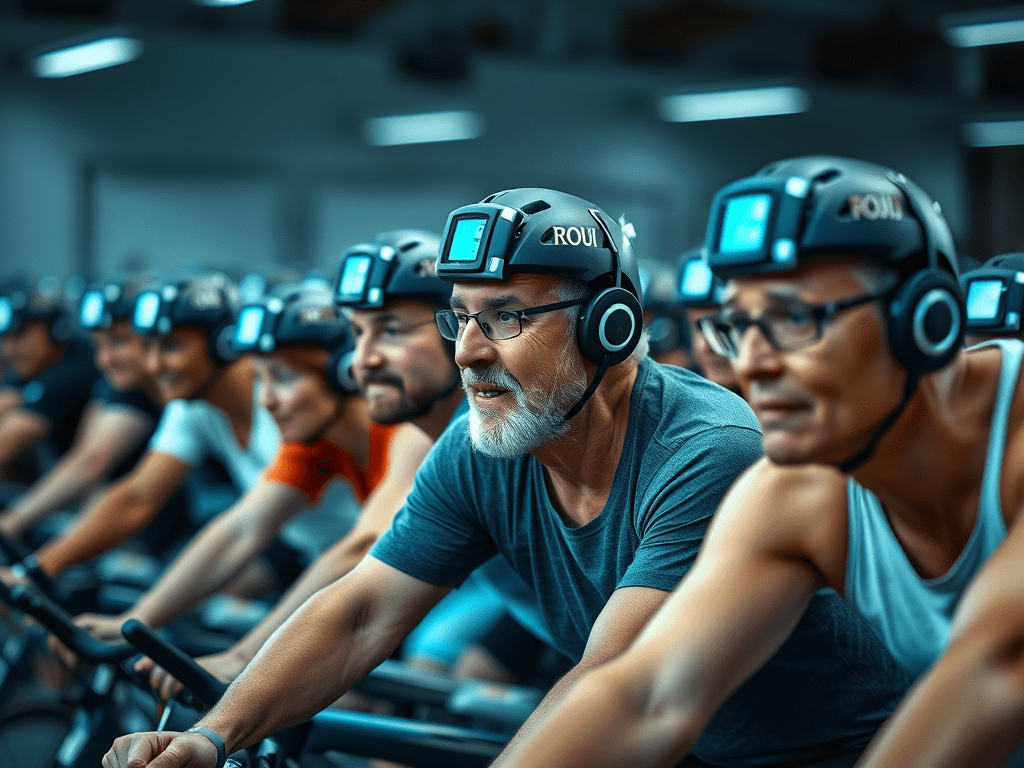
Twice a week my alarm clock rings at 4:20am, informing me there’s an early-morning indoor cycling class in my immediate future.
Right after shutting the alarm, I have a decision to make:
1. Drag my whiny butt out of bed and head for the gym
or
2. Invent an excuse to tell my wife later, and go back to sleep.
So far, the gym has won consistently. The class isn’t much fun — we don’t go anywhere — but I’m convinced it’s helping me. My attendance has been stellar since January.
I often mutter “This had better work,” under my breath. Increasingly, evidence shows it can.
Does Exercise Slow Parkinson’s Progression?
In 2003, Dr. Jay Alberts and a friend rode a tandem bicycle across Iowa. His friend had Parkinson’s, and within a few days of the ride her symptoms eased significantly.
This prompted Dr. Alberts to launch a series of research projects that demonstrated a strong correlation between high-intensity exercise and improved motor symptoms.
It’s become conventional wisdom: under the right circumstances, exercise can slow Parkinson’s progression.
Now we’re beginning to learn why: high-intensity exercise appears to change the brain.
In 2024, Yale School of Medicine released a study concluding high-intensity exercise may reverse neurodegeneration by preserving dopamine-producing neurons.
This year, a new study published in the journal Clinical Neurophysiology “found cycling helps restore neural connections damaged by Parkinson’s disease.”
Researchers recruited nine Parkinson’s patients, each of whom had previously undergone deep brain stimulation surgery (DBS). According to Dr. Aasef Sheikh of the Neurological Institute at Cleveland Medical Center, the implanted DBS devices “leveraged DBS for its unique ability to record neural activity in the brain region surrounding the stimulation lead.”
Scientists utilized an adaptive cycling program where over time, the bike “learned” how each participant performed while biking. For example, while a game screen allowed participants to know their pedaling intensity, the bike would add or remove resistance depending on each rider’s effort level.
The patients participated in 12 cycling sessions over a four-week period. Throughout, the DBS electrodes were recording brain activity near the devices.
There was little immediate change after the early sessions. But by the end of the four-week period, reports Neuroscience News, scientists “saw a measurable change in the brain signals responsible for motor control and movement.” And patients reported symptom improvement.
The takeaway: exercise doesn’t just manage symptoms—it changes the brain.
This information, along with subsequent studies, will help us home in on exactly what exercises deliver the most significant benefits.
Reading these studies gives me hard evidence that my spin class is helping me put up a fight against PD.
So when my alarm rings at 4:20 tomorrow, I will (probably) get out of bed.
Like this article? Share it by clicking a button below.
So…SHOULD You Approach a Stranger with Parkinson’s?
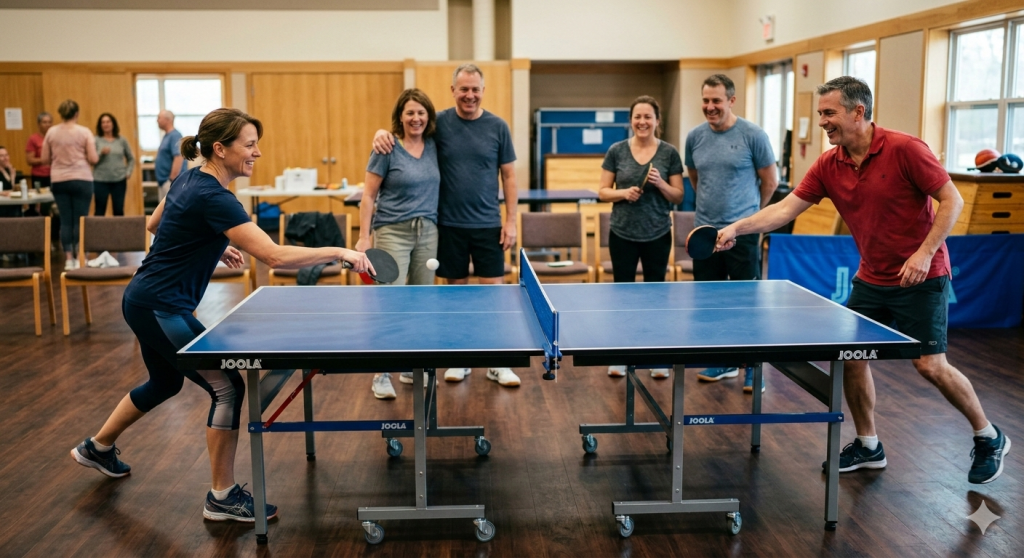
Last week’s article on whether it’s okay to approach a stranger who may have Parkinson’s generated a great deal of discussion. I had conversations about this on the blog, on Facebook, on the Turnto app, and in person at my boxing and ping pong gatherings.
People with Parkinson’s were evenly split on the subject. A reader from Arkansas commented “I recently had a similar experience where I simply made eye contact and asked ‘Parkinson’s?’ He responded in the affirmative and a great conversation ensued. We need to be bold.“
Chris Anthony, who writes the excellent From Where I Sit blog on Substack, saw reason to hesitate. “It would be an on the spot, judgement call for me. The old adage ‘it takes one to know one’ is true. I can recognize the symptoms—at least the most commonly visible ones—but the person may not have been diagnosed, or may be in denial. You just don’t know. And then, many people just can’t talk about their situation with strangers.“
With a couple of exceptions, readers who didn’t have PD were overwhelmingly in the “It’s rude, don’t do it” camp. My wife and my sister — smart people both — advised me to keep my mouth shut.
I only heard from one person who’d been approached (twice!) herself, both times by strangers who didn’t have Parkinson’s. Both conversations took place soon after her diagnosis, and both left her feeling defensive.
I’ve settled on a position similar to my viewpoint on the word “Parky:”
If you don’t have Parkinson’s, stifle.
If you do have Parkinson’s and want to approach a stranger who may also have it, you’re within your rights. But be prepared with an apology and an exit strategy in case the conversation goes poorly.
Me? I’m not gonna do it. I don’t trust my diagnostic skills or social graces enough to take the risk.
.
Bonus for Those Who Read to the Bottom
Frankie Valli sings Dylan.
.
I’m not generally a fan of AI-generated music. But this funk version of AC/DC’s “Back in Black” (sent to me by loyal reader Paul) is pretty good.
.
Loyal reader Kevin recently reminded me about Detroit’s Frijid Pink, who pummeled “House of the Rising Sun” in 1969.







 Shakin' Street -- A Parkinson's Blog
Leave a reply to collectionleftebb509fd81 Cancel reply