A Payment Barrier For People With Parkinson’s — And What I Did About It

When I pulled into a parking lot in Banks, Oregon on June 28, I was not expecting a lesson about barriers…or about my state government.

I was volunteering at a bike ride called Pedal Support, a fundraiser for Parkinson’s Resources of Oregon. The lot at the Banks/Vernonia Trailhead is owned by the Oregon Parks and Recreation Department (OPRD). There’s a $10 fee to park there.

These signs greeted me at the entrance:
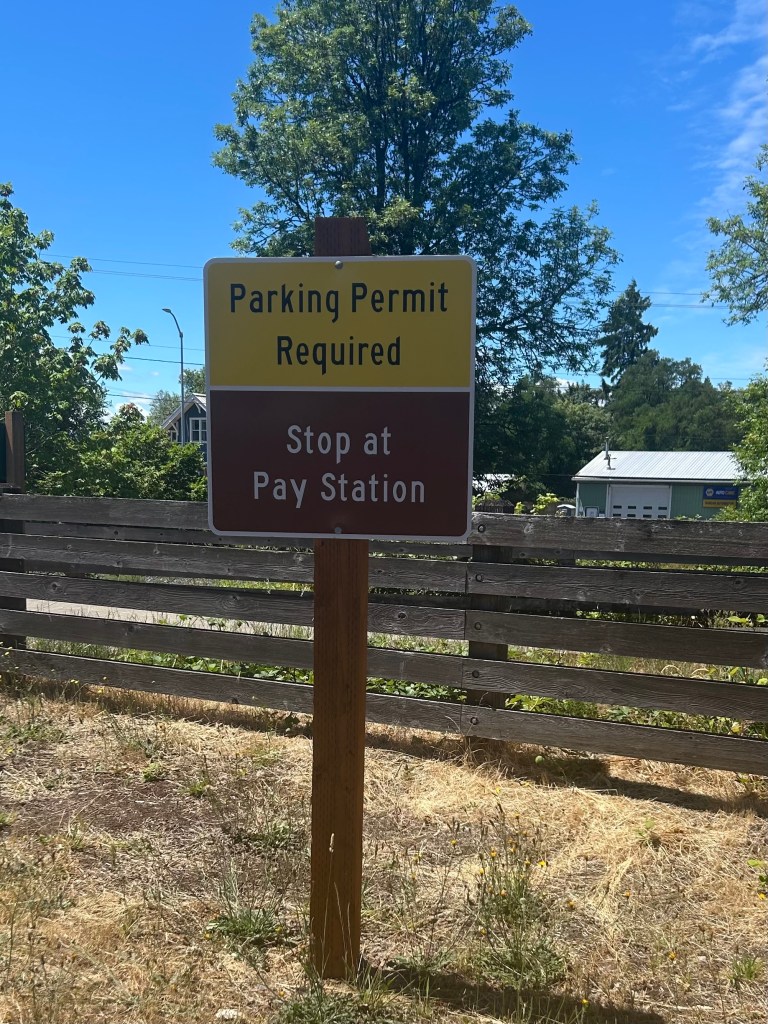
At one time, there might have been a formal pay station. Maybe there was once a person who collected the money. Or a machine you could use to process a card payment. Or maybe even a box where you could stick a $10 bill into an envelope and then slide the envelope into a slot.

In 2026 there’s a sign with a QR code. The only option is to pay with your phone.

.
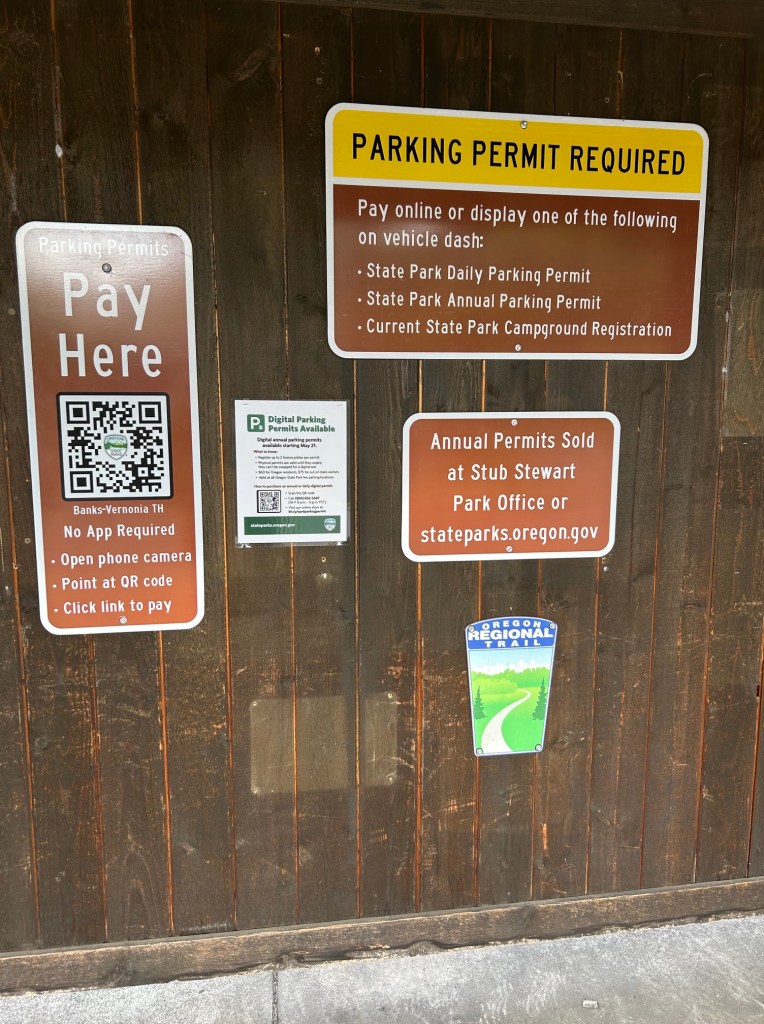
Oregon State Parks parking lot signage at the Banks/Vernonia Trail trailhead

For a person with two perfectly-working hands, the process is an annoyance. For a person with Parkinson’s, or any condition that causes dexterity issues, the process can be difficult-to-impossible.

.
.

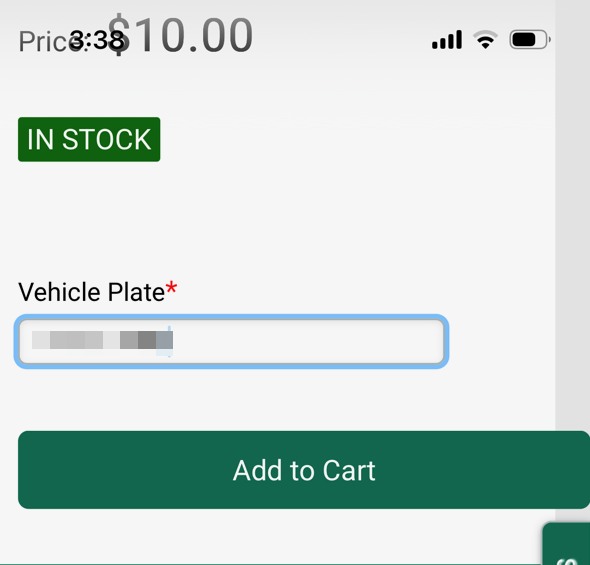
Not terrible. I filled in my license plate and clicked “Add to Cart.” Next up:
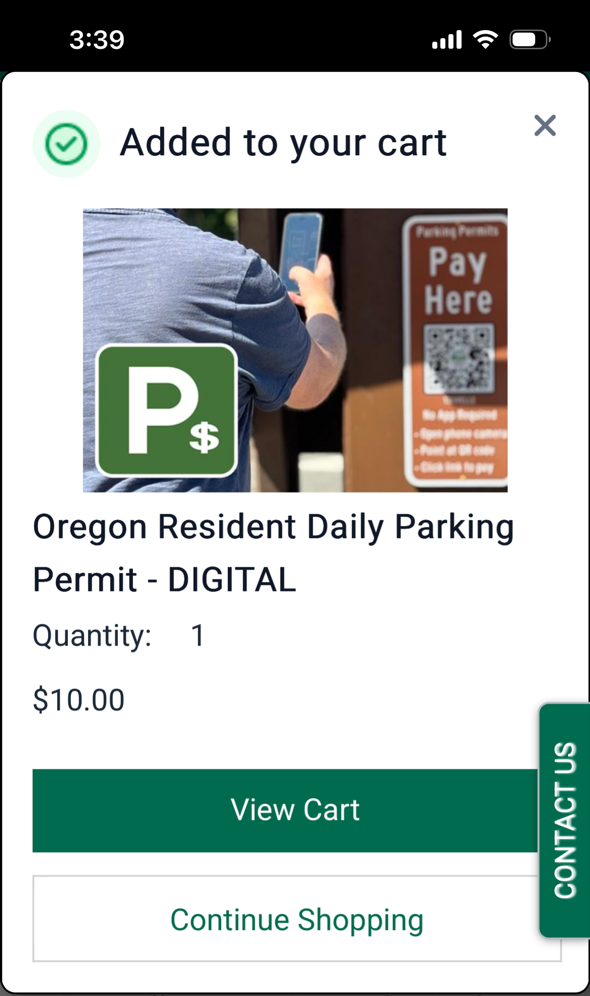
.

Another click with a shaky finger. Let’s view the cart. What happens next?

My "shopping cart"

Click again to check out.

.

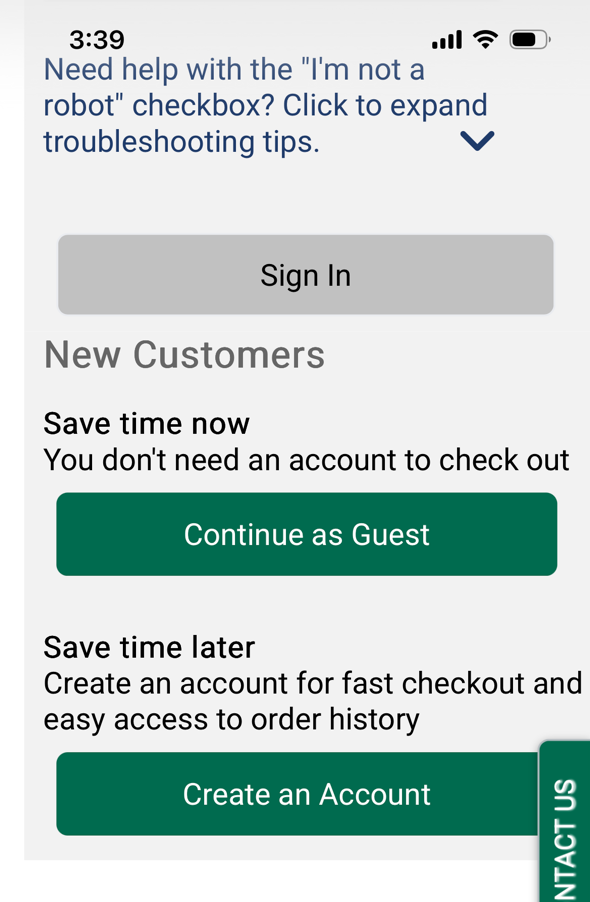
Establish an account?

I don’t want to create an account — I want to ride my bike. “Continue as Guest.”

.
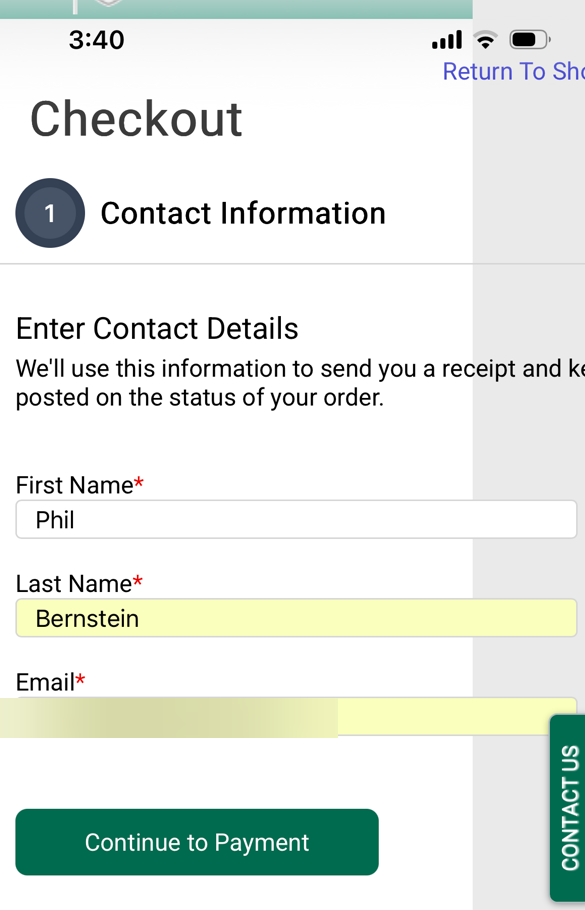
Enter contact details

Fine. Let’s pay.

.

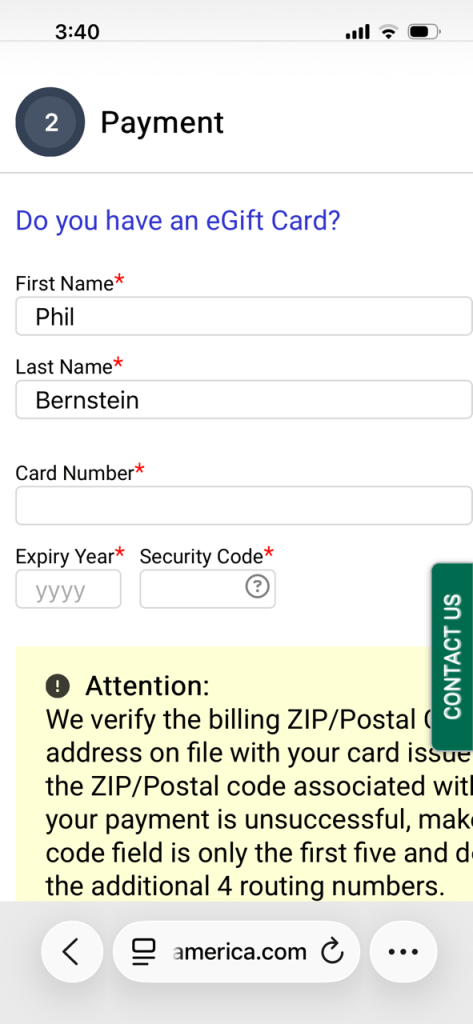
Payment details

Good gravy — I have to fill in my first name, my last name, my 16-digit card number, my 3-digit security code, and the expiration date. But what about the expiration month?

Oh. Separate box.

.
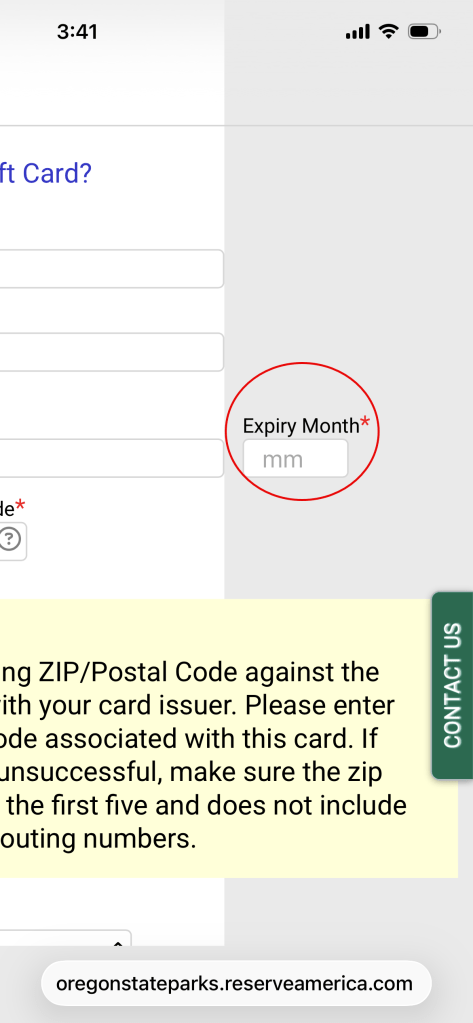
Expiration month!

OK, am I done? Not yet.

.

OK, just two more clicks, right. Accept the terms, and then say I’m not a robot. Then we’re done, right?

Wrong!
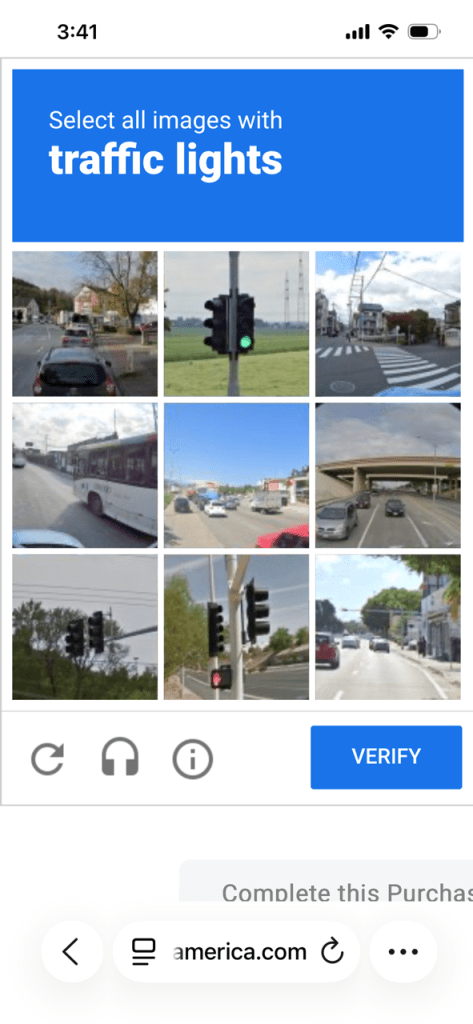
Before we can put our phones away and ride our bikes, we’ve got to find all the traffic lights. THEN we can go.

.

I’m lucky enough to have mild symptoms these days. My right hand is balky, but I can get the fingers to work when they need to. I was able to complete the task while uttering only a few naughty words .

But this was a Parkinson’s fundraiser. Many of the riders had the disease. A guy parked a few spaces away from me was struggling with the form. He handed me his phone, and I filled in the boxes for him.

After the ride was over, I wondered if there would have been any other way to take care of this.

A few days later I woke up from a sound sleep thinking that I might have missed a pay station sitting out in the open on the lot — I am not the most observant person you’ve ever met.

The existence of a phyical pay station would have caused me to be the object of nationwide ridicule.

On July 4, I celebrated Independence Day by driving back to Banks. I walked from one end of the lot to the other and back.

No pay station — just the sign with the QR code.

I also searched online for a way to buy a day pass in advance. The state website does sell annual passes online.

As for day passes, the site says this: “Daily parking permits for Oregon residents ($10) and non-residents ($12) are available at every day-use park that charges a fee.”

Which is sort of true — daily permits are available if, and only if, you can go through the entire payment process on a smartphone. Which shuts out anyone who doesn’t have two fully-working hands.

.

IF YOU SEE SOMETHING, SAY SOMETHING

Would Oregon Parks and Recreation make changes to this procedure if they knew it made their parking lots inaccessible for many visitors?

I decided to find out.

An online search revealed that Oregon Parks Department has an employee who works on issues like this: Helena Kesch, the department’s ADA Coordinator.

I sent Ms. Kesch an email describing my experience in detail, and asking if there might be a better way to collect parking fees. In my letter, I mentioned that

  • A way to buy a daily pass in advance online would help.
  • Having a non-phone payment method (like a credit card pay station) onsite would help.
  • Incorporating Apple Pay/Google Pay into the process would help.
  • Getting rid of the CAPTCHA would help.

I figured it would take several weeks for someone to get back to me, and the response would either be a form letter or a list of reasons why my ideas were unreasonable.

To my surprise, Ms. Kesch wrote me a thoughtful response the very next day. It began,

Thank you for taking the time to share such a detailed description of your experience at the Banks/Vernonia trailhead. I really appreciate you outlining the specific barriers you encountered—this kind of firsthand feedback is incredibly helpful as we work to ensure our day‑use permit system is accessible to all visitors.

I’m especially grateful that you highlighted how the current smartphone-only process, the amount of required typing, and the CAPTCHA create significant challenges for people with Parkinson’s and others with dexterity or motor‑control limitations. Your suggestions for advance purchasing options, additional onsite payment methods, and incorporating tools like Apple Pay/Google Pay are all thoughtful and actionable ideas.

She told me that it is possible to buy daily passes in advance by visiting any OPRD office in person. This strikes me as inconvenient at best, but it’s something.

And she promised to share my feedback, along with the screenshots I sent her, with the folks who manage day‑use fee systems and digital accessibility. “This will help us evaluate where changes can be made in the near term and where longer-term improvements might be possible.”

TWO VALUABLE LESSONS

I’m a relatively new member of the disabled community. It’s fair to say I didn’t pay much attention to accessibility issues when they weren’t an issue for me.

This may also be the first time, in 39 years as an Oregon resident, that I’ve ever tried to make contact with someone in state government.

So I’ve gained two valuable insights from this experience:

  1. A mild inconvenience for one person can be an insurmountable barrier to someone else.
  2. Rather than just complaining to my spouse at the dinner table, I might accomplish something tangible by saying something to a person who can do something about it. This is, admittedly, a sample size of one, but in this case I found a person who responded quickly, empathized, and promised to address the issue.

Will anything come of this? I have no idea. Governments move slowly in the best of times, my suggestions would all cost money, and Oregon is not currently flush with discretionary funds.

But it’s nice to realize that at least some of the time, it pays to speak up. I will report back if subsequent developments warrant it.

.

.

AI DISCLOSURE

The image at the top of this post was done with WordPress’ AI tool.

Every word of this post was written by a human being, Phil Bernstein. This was written by me. Me, me, me.

.

Bonus for Those Who Read to the Bottom

.

Want to support this blog?

Buy Me A Coffee

.

Sweet Dreams are sometimes made of balloons, bicycle horns, and barrels. The Eurythmics hit, re-imagined.

.

I’d forgotten that for a while, Todd Rundgren sang lead for a version of The Cars.

.

The King Cousins were part of the King Family, who had a series of television variety shows in the 1960’s and 1970’s. Here they remove the magic from the Lovin’ Spoonful hit.

.

Tap dancing to Immigrant Song? Tap dancing to Immigrant Song!

.

Dropkick Murphys offer up a subtle, quiet, introspective cover of the Springsteen classic.

.

A frisky instrumental take on “You Really Got Me,” featuring the immortal Mick Ralphs.

12 responses to “A Payment Barrier For People With Parkinson’s — And What I Did About It”

  1. Kevin Rowan Avatar
    Kevin Rowan

    Excellent post today. Thoughtful and useful in many ways. Many of your arguments apply to a less shaky population as well. Let’s hope some actual good comes of your government contact. I’m curious to hear how your actual ride went though. Maybe your next post?

    My favorite of your musical sharings this week is the Dropkick Murphys cover of “Badlands”. Sounds to me like maybe, just maybe…Bruce got it wrong and this is the better version. I’m not a huge Dropkick Murphys fan but I really like their approach to this song. Thanks! (Still shuddering about the King Cousins. Ugghhh)

    Like

    1. shakinstreet.com Avatar

      This was a long post, so I decided to stick to a single topic rather than describe the ride. Which went really well. We exceeded our financial goal, so I really appreciate your support.

      Dropkick Murphy’s arrangement of “Badlands” isn’t all that far from Springsteen’s. The guitar solo is note-for-note from the record. Since they don’t have a saxophone, they added a second guitar solo, which takes some liberties. What makes this stand out, I think, involves two factors:

      1. They play it faster.

      2. Ken Casey’s bellow/croak/howl, which works really well on the song.

      Like

  2. JB358PWP Avatar
    JB358PWP

    Couple of comments. First, Ms. K is the ADA coordinator?? Maybe she needs to find a better fitting job, because obviously she doesn’t understand what accessibility looks like. My guess is she has no ADA qualifications and is just filling a token position. Believe it or not, that is quite common in the government and some nonprofit worlds.
    Second, I work for an Area Agency on Aging, where our clients, on average, are 68+. Many aren’t computer or smartphone savvy. Some don’t even have a smartphone. Yet our 45 yr old CEO, and the state department on aging, continue to make everything digital, including putting announcements and purchasing events tickets only on the website or social media. I had a gentleman request he be put back on the mailing list (yes snail mail) for news and events. When I contacted our 30 something outreach/media person, I was told we don’t do that anymore. I responded and CCd our CEO, explaining who our population of consumers are and a good many don’t use or even have access to the digital world. The CEO told her to put him on a mailing list, which she wasn’t aware even existed, and I’m not even sure, frankly. I’ve even had older adults tell me they don’t know how to check their VM so they have no idea we called them.
    Oh one more thing. When I applied for ADA accommodations, the VP of HR told me he wasn’t familiar with ADA and was looking forward to learning. ?@!$?
    We still have more educating to do and battles to fight. I feel like we’re going backwards.

    Like

    1. shakinstreet.com Avatar

      In 30 years as a salesperson, I had better results in persuading people by treating them with respect instead of throwing my weight around. It may be different in the disability-advocating business — I recognize that we have the ADA in part because activists parked their wheelchairs in front of city busses, occupied the HEW building in San Francisco, and crawled up the steps of the US Capitol. But I want to try honey first before resorting to…the other stuff.

      I don’t know Ms. K’s background, or how much influence she has in her position. But she got back to me quickly and treated my concerns seriously. I’m going to give her a chance to do her job before employing other tactics.

      The move to all-digital isn’t doing us any favors — seeing Brain & Life Magazine eliminate their print edition is particularly distressing. I agree with you that it sometimes feels like we’re going the wrong direction.

      Liked by 1 person

      1. JB358PWP Avatar
        JB358PWP

        Just to clarify. When I said ‘battles’ I wasn’t referring to anything aggressive lol Absolutely education is the primary focus. There are times, however, when we do need to advocate, but done with respect. Being aggressive only shuts down the conversation, and I fully believe most people just need to be educated. I don’t think they are purposefully trying to shut the disabled. So, yeah, every encounter, like this one, is an opportunity to educate.

        Like

      2. JB358PWP Avatar
        JB358PWP

        Here’s another thought. Going digital does save organizations money, and probably that’s going to increase. So, along with educating the general public, we should explore making digital equipment accessible – both available and user friendly. I know my local library used to have free classes on using technology and my agency used to provide tablets. I think the grant funds ran out for that, but I think this all needs to go back on the front burner of awareness.

        Like

      3. shakinstreet.com Avatar

        I agree – the world is going digital whether we object or not. And educational programs will absolutely help.

        Interestingly enough, much of the reaction I received on social media and by email came from people who are not disabled, and who consider themselves digitally competent. Their common complaint is that many smartphone payment systems are clunky and difficult to navigate. That is certainly the case with the current version of the Oregon State Parks parking fee system, and I heard from several people about difficulties they have had paying their bills at restaurants. I am cautiously optimistic that we will see some improvements down the road.

        Liked by 1 person

      4. JB358PWP Avatar
        JB358PWP

        Oh yeah totally agree. Some systems are beautifully streamlined and then there’s paying my electric bill. No app. They do save your account and banking info, but you have to repeat everything else, review, confirm, pay. On a website through the phone. My gas regularly asks for input but electric never. It’s interesting that the best systems ask for your opinion but the worse don’t.

        Like

  3. buttery775092e960 Avatar
    buttery775092e960

    Phil,

    Another great post describing “What to do/not do…” in given situations for those having PD or other disabilities.

    There is a new alternative to obtaining a 1-day Hang Tag for Oregon State Parks, assuming a) one has a library card in a participating library and b) can travel to/from a local library to check-out/return a free Pass. See the following sites for specific details:

    Oregon Public Broadcasting: Check out free Oregon State Park parking passes at your local library
    https://www.opb.org/article/2026/07/07/oregon-state-parks-free-parking-pass-library/

    Acquire 1-Day Hang Tags for Oregon State Parks via local Oregon libraries:
    https://stateparks.oregon.gov/index.cfm?do=visit.parking

    Happy travels all…

    Like

    1. shakinstreet.com Avatar

      Thanks for the tip, Leon. The library initiative is nice, but I don’t see it solving this problem.

      My issues with it:

      1. Not all libraries in Oregon participate in the program.
      2. Each library branch has a maximum of four passes, and some have fewer.
      3. As near as I can tell (I spent some time on the Multnomah County Library website) there’s no way to tell at any given time if your branch has any passes in stock — it appears you have to visit the branch in person and ask at the desk.
      4. You have to make three trips to use it — one to the library to pick up the pass, then your visit to the state park, then back to the library to return the pass.

      It’s a step in the right direction, but inconvenient and unreliable as it’s currently set up.

      Like

      1. buttery775092e960 Avatar
        buttery775092e960

        Phil,

        Yes, per your comment on my post, the “visit your local library” option does not solve access to Oregon State Parks for all that have disabilities of various kinds. But for those who are still mobile and have patience, the library option can work.

        The Oregon State Park entry system, like entry to National Parks and Federal Recreation Areas, is not a “one size fits all” situation. For some, age is a main criterion; for others it is disability and/or Veteran’s status. The most comprehensive “free entry” to Federal Parks and Recreation Areas is the “Access” pass. It allows entry to most Federal lands [not Area 51 in Nevada] for those with “disability” that is not age related: https://store.usgs.gov/access-pass  The pass is free except for shipping and handling delivery.

        Unfortunately, Oregon does not seem to have a State Park pass equivalent to the Federal “Access” Pass. There is one caveat for free day use entry to Oregon State Parks according to web site info cited above. That is, for future personal or community bike-a-thons: “Did you know? If you walk, bike, bus, or get dropped off at the [Oregon State] park, you don’t have to pay a parking fee!”

        Again, stay well…all.

        Like

      2. shakinstreet.com Avatar

        I was not aware of the Access Pass program, so I appreciate the tip. And your observation about State Park fees is well taken – you only have to pay the fee if you drive there. I don’t begrudge them the 10 bucks – it costs money to maintain things, and I’m happy to pay it. All I ask is that they do what they can to make it easy to give them the money.

        Like

Leave a comment

I’m Phil Bernstein

I was diagnosed with Parkinson’s Disease on May 25, 2023. At the time, I was only vaguely aware of Parkinson’s — primarily from articles in People about Michael J. Fox. And I didn’t know anyone with the disease.

Now, I know a lot more about the illness, and I’ve joined the Parkinson’s community in my hometown of Portland, Oregon.

I’ve found that writing helps me think through challenges, and this illness definitely qualifies as a challenge. I’ve started Shakin’ Street to help me think through the various obstacles, tools, and resources that a newly-diagnosed Parkinson’s patient encounters along the way.

I hope some of these posts help you address and tackle your own challenges.

Let’s connect